MOTIVAIT
  • Home
  • Solutions
  • Resources
  • About us
  • Contact us
  • Menu
  • Twitter
  • Linkedin
  • Instagram
Engagement

Does Black Friday Create Loyal Customers – or Just Expensive One-Time Buyers?

Every year, retailers invest huge budgets into Black Friday and Cyber Monday (BFCM) campaigns, offering steep discounts to drive a surge of sales. But as the dust settles in January, one question always lingers: do these seasonal promotions actually build long-term customer loyalty, or are they just an expensive way to buy short-term attention? 

In 2024, the UK retail saw some clear, positive shifts. Payment data revealed transactions over Black Friday weekend were up nearly 10% year-on-year, and online sales during “Black November” increased by around 3% compared with 2023. Fashion in particular performed well, with December clothing volumes growing 4.4% year-on-year.  

But behind the headlines, a familiar challenge remains, customers acquired during BFCM often show lower lifetime value (LTV) than those acquired at other times of the year. Thes shoppers tend to be more price-driven than brand-driven – leaving retailers with the challenge of turning bargain hunters into repeat, loyal customers.

Turning Black Friday Buyers Into Loyal Customers 

So how can retailers retain the customers they worked so hard (and spent so much) to acquire during Black Friday and Cyber Monday? 

The good news is that many of these shoppers can become loyal customers – if brands have the right retention strategies in place. For example, analysis has indicated that loyalty programme enrolments can jump over 100% BFCM compared to a typical weekend. This proves that peak trading periods aren’t just about discounts: they’re also prime opportunities to build lasting relationships. 

But here’s the catch: while 80% of UK shoppers are members of at least one loyalty programme, fewer than half use them actively. Simply signing a customer up isn’t enough; the real challenge is to keep them engaged. 

Beyond Discounts: Building Engagement and Advocacy 

For retailers and fashion brands, the focus needs to shift from transactional loyalty to emotional loyalty – from rewarding spend to building advocacy. That means using loyalty programmes not as coupon books, but as a platform to: 

  • Personalise experiences: Surveys show that around a quarter of UK consumers say they feel more loyal to brands that personalise their Black Friday marketing. Relevant product recommendations, targeted rewards, and tailored content are all crucial to turning one-time buyers into repeat spenders.
  • Surprise and delight: Incentives don’t always need to be discounts. Early access to collections, exclusive events, or gamified rewards can excite customers and build emotional connection.
  • Build brand advocacy: Encourage customers to become part of the brand story – through social sharing, reviews, referrals, and community engagement. Advocacy builds a stickiness that discounts alone cannot achieve.

The reality is that customers acquired through discount-driven campaigns may start with a weaker brand connection. But with the right mix of personalisation, loyalty mechanics and emotional engagement, retailers can still nurture them into long-term advocates who return far beyond Cyber Week. 

Where to Go From Here 

Discounts may capture attention, but loyalty builds longevity. The brands that thrive beyond this year’s peak period won’t just count how many orders they captured during Black Friday – they’ll measure how many of those customers are still active months later. 


To dive deeper into how brands can build advocacy and emotional loyalty in the digital age, download our latest whitepaper


Sources:  
  • https://the-cfo.io/2024/11/27/105617/ 
  • https://www.ons.gov.uk/businessindustryandtrade/retailindustry/bulletins/retailsales/december2024 
  • https://www.ons.gov.uk/businessindustryandtrade/retailindustry/bulletins/retailsales/july2025 
  • https://www.retaileconomics.co.uk/retail-insights-trends/ons-retail-sales-december-2024 
  • https://www.imrg.org/blog/black-friday-2024-key-trends-and-observations 
  • https://www.iagloyalty.com/news-insights/personalisation-boosts-customer-loyalty-heres-why 
  • https://loyaltylion.com/blog/loyalty-programs-bfcm-2024 
  • https://www.imrg.org/blog/black-friday-2024-key-trends-and-observations 
  • https://www.decisionmarketing.co.uk/news/black-friday-lays-foundations-for-true-customer-loyalty 
  • https://loyaltylion.com/resources/consumer-loyalty-research 
30/10/2025/by Matt Charles
https://www.motivait.net/wp-content/uploads/2025/10/Opinion-Piece_ENG.png 1333 2000 Matt Charles https://www.motivait.net/wp-content/uploads/2022/10/motivait-logo-web-300x113-1.png Matt Charles2025-10-30 10:43:372025-11-05 10:03:40Does Black Friday Create Loyal Customers – or Just Expensive One-Time Buyers?
Engagement

Between the posts: What Football Taught Me About Employee Engagement

Earlier in my life, I spent countless hours between the posts as a goalkeeper, dreaming of becoming a professional footballer. That dream didn’t quite materialise, but I was fortunate to enjoy playing the game at a decent level for many years. 

Football back then wasn’t glamorous. Training twice a week in the evenings, often on muddy pitches in wind, rain and cold was tough, but it was a huge part of my life. 

Looking back, those years taught me some of my most valuable lessons about people, teamwork and what we now call employee engagement. 

Discipline

Football demanded discipline. Showing up for training, pushing through pre-season pain, following tactics and picking yourself up quickly after a poor result or performance. The same consistency is essential in the workplace. Employees engage more when leaders create an environment where people understand the vision, know what’s expected and trust that standards are applied fairly. Consistency builds trust and trust fuels engagement.  

Teamwork

As a goalkeeper, you can’t win a match on your own. I relied on defenders to protect me, midfielders to dictate play and forwards to score most of the goals. Every role mattered, even if it wasn’t in the spotlight. Engagement in the workplace works the same way: it flourishes when people feel their contribution is valued and can see how their work connects to a shared purpose. If even one part of the team feels isolated or undervalued, overall performance can suffer. 

Voice

It wasn’t just about making saves and keeping the ball out of the net. From my position on the pitch, I had a unique view of the game. I could see the runs opponents were making or the space our defenders were leaving open. It was my job to communicate, guide and keep the team alert, sometimes making the difference between winning and losing. The same applies at work: the people closest to the action often see the risks or opportunities first. The best leaders listen, involve and empower their people to speak up. 

Leadership

One thing that really stayed with me was the impact of the manager, coaches and captain. It wasn’t just about setting the tactics, they inspired us to be our best, encouraged every player and led by example. Watching how they motivated the team showed me that engagement is contagious. When people feel supported, respected and guided by someone they trust, they step up, take ownership and deliver their best. 

As my career progressed, these lessons stayed with me. I helped set up employee-led teams who took the initiative to identify and solve their own challenges. Seeing people take ownership, bring energy to ideas, deliver solutions and grow their skills reminded me of those moments on the pitch when everything clicked and everyone played their part. 


For me, employee engagement has never been about a programme or a survey. It’s about creating the conditions where people feel valued, supported and challenged; where they care about the mission and understand their role in achieving it. Just like in football, engagement doesn’t guarantee victory, but it gives the team the best chance to succeed. 

That’s why I’m still so passionate about employee engagement and the impact it can have on the world of work. Whether on the pitch or in an organisation, success comes when people are involved, committed and inspired to play their part. 

What lessons have you learned from sport or other interests outside work that have shaped how you create an effective working environment? 


 Looking to transform your employee engagement strategy?

Download our detailed report or speak to our team

28/10/2025/by Bill Paris
https://www.motivait.net/wp-content/uploads/2025/10/Opinion-Piece_ENG_Bill-3.jpg 3999 6000 Bill Paris https://www.motivait.net/wp-content/uploads/2022/10/motivait-logo-web-300x113-1.png Bill Paris2025-10-28 15:22:402025-11-05 10:03:34Between the posts: What Football Taught Me About Employee Engagement
Customer Engagement, Engagement

Turn Shoppers into Brand Advocates: Seven Customer Engagement Strategies That Deliver Results

In Retail, Experience Is Everything

Let’s be honest: products can be copied. Prices can be undercut. But the one thing no competitor can replicate? The relationship you build with your customer.   

In 2025, customer engagement isn’t a “nice-to-have”, it’s your growth engine. The most successful brands are the ones who connect, listen, and show up for their customers, consistently.  

So if you’re still thinking in terms of transactions, it’s time to shift the mindset. This isn’t about selling more; it’s about building a brand people believe in.  

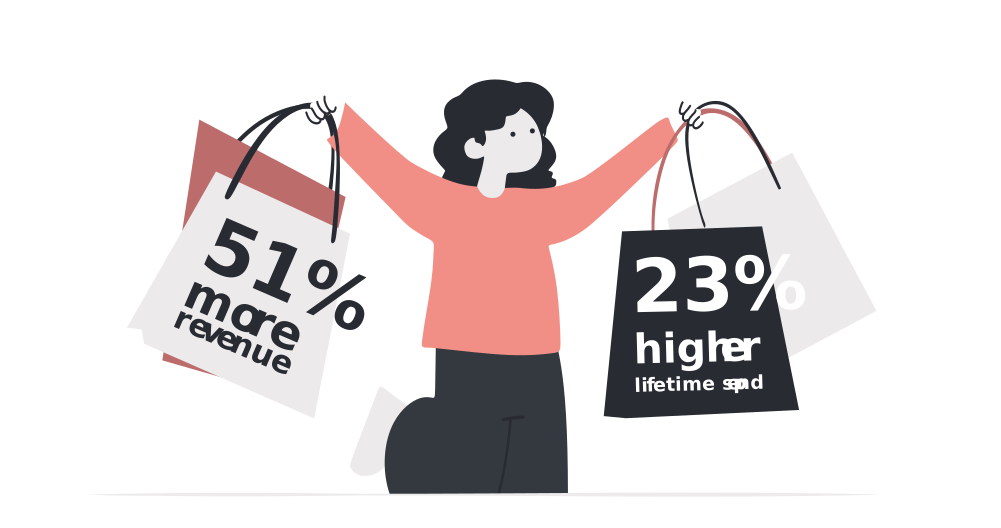
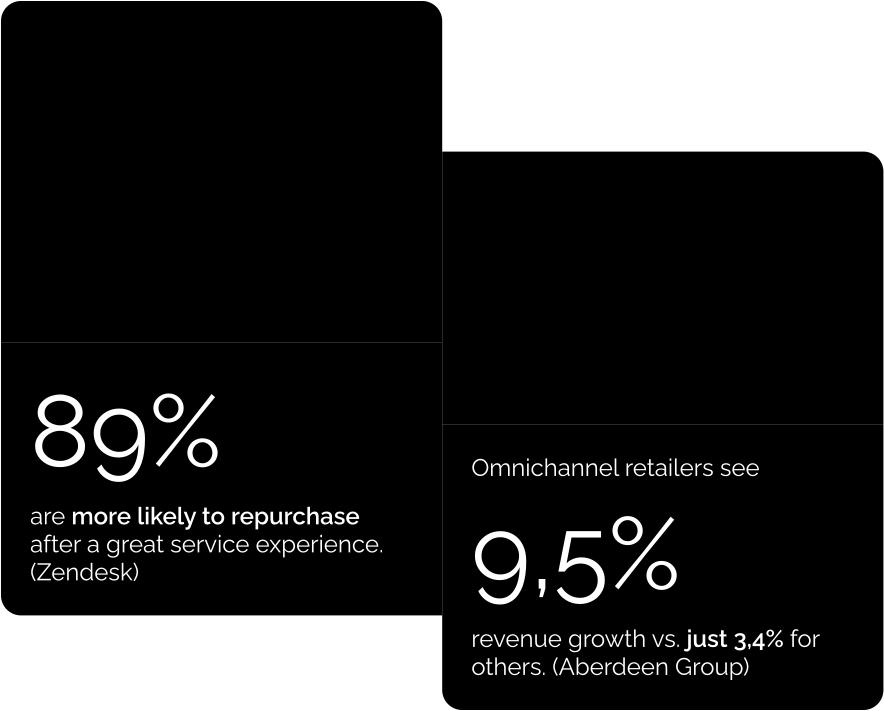
“Engaged customers drive 51% more revenue and spend 23% more over their lifetime”. (Gallup)

Why Engagement Pays Off


7 Strategies to Strengthen Customer Engagement


1. Personalise the customer experience 

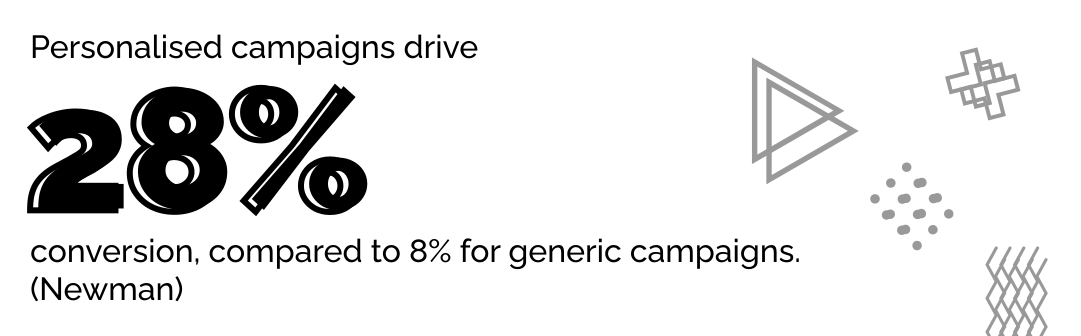
Customers expect personalised, relevant communications. Leverage customer data to tailor product recommendations, content and messaging across all channels.  

Done well, personalisation makes the customer feel understood, valued and more likely to return. 


2. Design a loyalty programme that goes beyond points

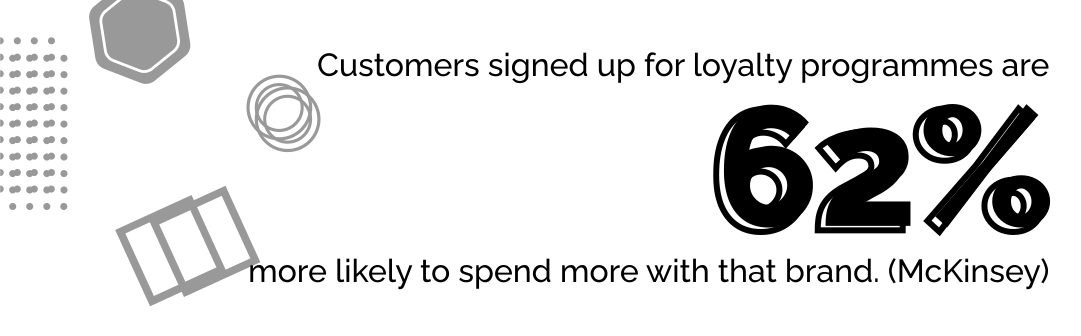
Modern loyalty programmes must deliver more than discounts. Think exclusive rewards, early access, VIP events, and experiential benefits that create emotional value. 

A smart loyalty programme also provides valuable behavioural data that can inform wider engagement strategies. 


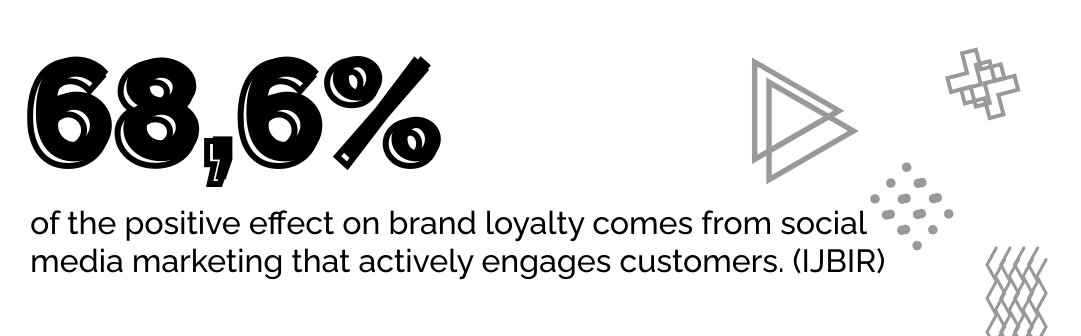
3. Make social media a dialogue

Social platforms are an ideal space for two-way communication. Use them to build relationships, not just promote products. 

Encourage customer interaction through polls, questions, live Q&As, and user-generated content. Acknowledge comments and feedback promptly and authentically. 

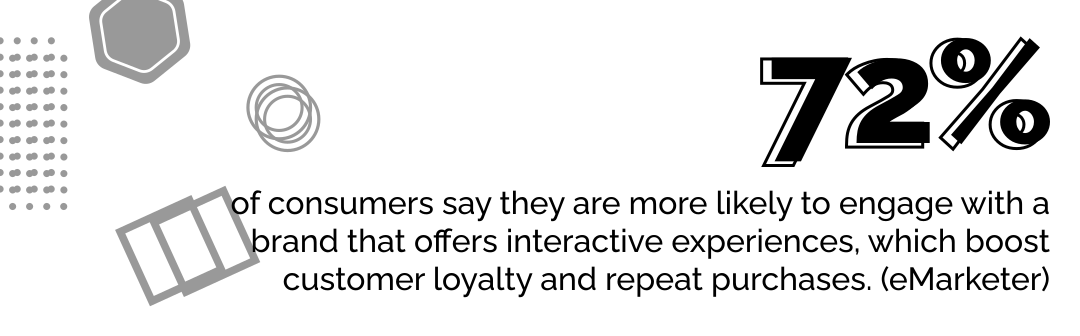
4. Use technology to enhance (not replace) the experience

Digital tools can transform the customer journey. Examples include: 

  • Virtual try-ons and augmented reality
  • In-store tablets and interactive displays
  • Personalised mobile apps
  • Gamified loyalty experiences

These tools should bridge the physical and digital experience, offering convenience, consistency, and deeper engagement. 


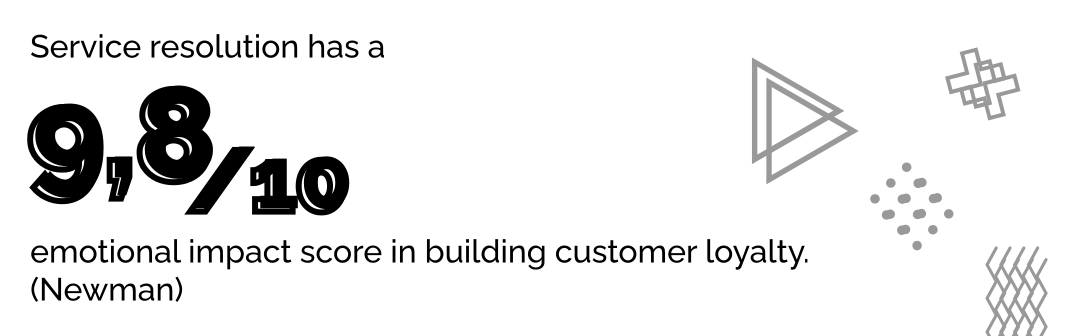
5. Empower customer service to build loyalty

Customer service is often the most human part of your brand, and it matters deeply. 

Train teams to respond quickly, empathetically, and consistently across channels. A well-handled issue can often build more trust than a routine transaction. 


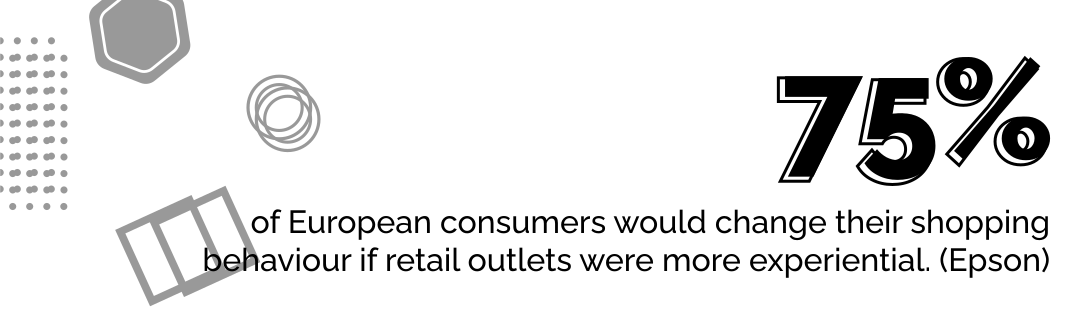
6. Transform retail spaces into experiences 

Physical retail is still vital, but it must evolve. Consumers expect more than shelves and checkouts. 

Create spaces that tell your brand story, invite discovery, and offer immersive experiences. Host events, workshops or product demonstrations. Make your store a destination, not just a location.


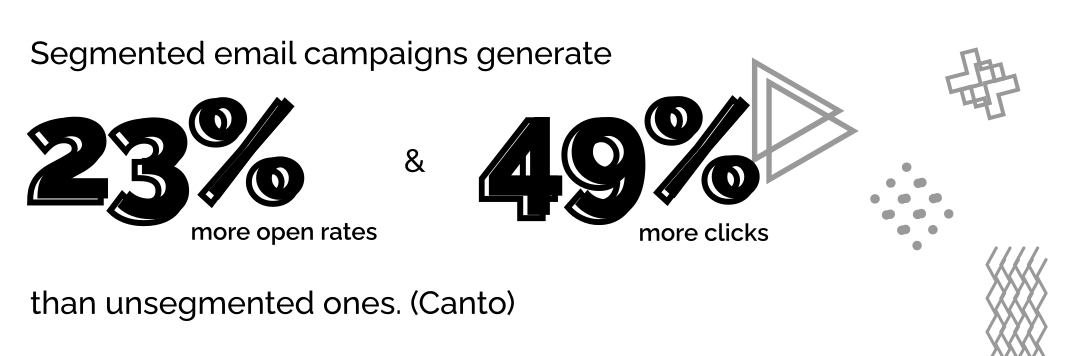
7. Refine email marketing with value and segmentation 

Email remains one of the highest-performing engagement channels, when done right. 

Use segmentation to deliver relevant, timely and personalised content. Focus on delivering value, whether that’s exclusive access, helpful insights or tailored offers, rather than simply driving sales.


Small Steps, Significant Gains

Customer engagement isn’t a one-off campaign; it’s a long-term mindset. Start with one or two of the strategies above and build from there. 

The brands that win in modern retail are those that connect emotionally, not just commercially. When customers feel recognised and valued, they stay loyal, and they spread the word. 


Looking to transform your customer engagement strategy?

Download our detailed report or speak to our team

08/10/2025/by Patricia Wiggett
https://www.motivait.net/wp-content/uploads/2025/10/rawkkim-aYA3IcdyMcc-unsplash.jpg 3572 5358 Patricia Wiggett https://www.motivait.net/wp-content/uploads/2022/10/motivait-logo-web-300x113-1.png Patricia Wiggett2025-10-08 14:48:022025-11-05 10:03:14Turn Shoppers into Brand Advocates: Seven Customer Engagement Strategies That Deliver Results

Categories

  • Alumni
  • Behavioural Design
  • Case Study
  • Citizens
  • Customer
  • Customer Engagement
  • Employee Engagement
  • Employee Experience
  • Employees
  • Engagement
  • Gamification
  • Learning
  • Learning & Development
  • Loyalty
  • Membership
  • MOTIVAIT
  • Motivation
  • Partners
  • Press releases
  • Team building
  • Whitepapers

Search

Motivait


UK Offices

Newcastle
The Core 5.22
Newcastle Helix
Bath Lane
Newcastle upon Tyne
NE4 5TF
+44 191 495 7340

Spain Offices

Madrid
Av. de Bruselas, 13
Ed. América
28108 Alcobendas
+34 91 425 86 57

Solutions
About
Careers

Resources
Blog
Contact

Cookie Policy | Legal Information | Quality and Security Policy | Motivait® is a registered trademark of Motivait Holdings Ltd.
  • Twitter
  • Linkedin
  • Instagram
Scroll to top
Manage Cookie Consent
We use cookies to ensure that we give you the best experience in our website
Functional Always active
The technical storage or access is strictly necessary for the legitimate purpose of enabling the use of a specific service explicitly requested by the subscriber or user, or for the sole purpose of carrying out the transmission of a communication over an electronic communications network.
Preferences
The technical storage or access is necessary for the legitimate purpose of storing preferences that are not requested by the subscriber or user.
Statistics
The technical storage or access that is used exclusively for statistical purposes. The technical storage or access that is used exclusively for anonymous statistical purposes. Without a subpoena, voluntary compliance on the part of your Internet Service Provider, or additional records from a third party, information stored or retrieved for this purpose alone cannot usually be used to identify you.
Marketing
The technical storage or access is required to create user profiles to send advertising, or to track the user on a website or across several websites for similar marketing purposes.
Manage options Manage services Manage {vendor_count} vendors Read more about these purposes
View preferences
{title} {title} {title}