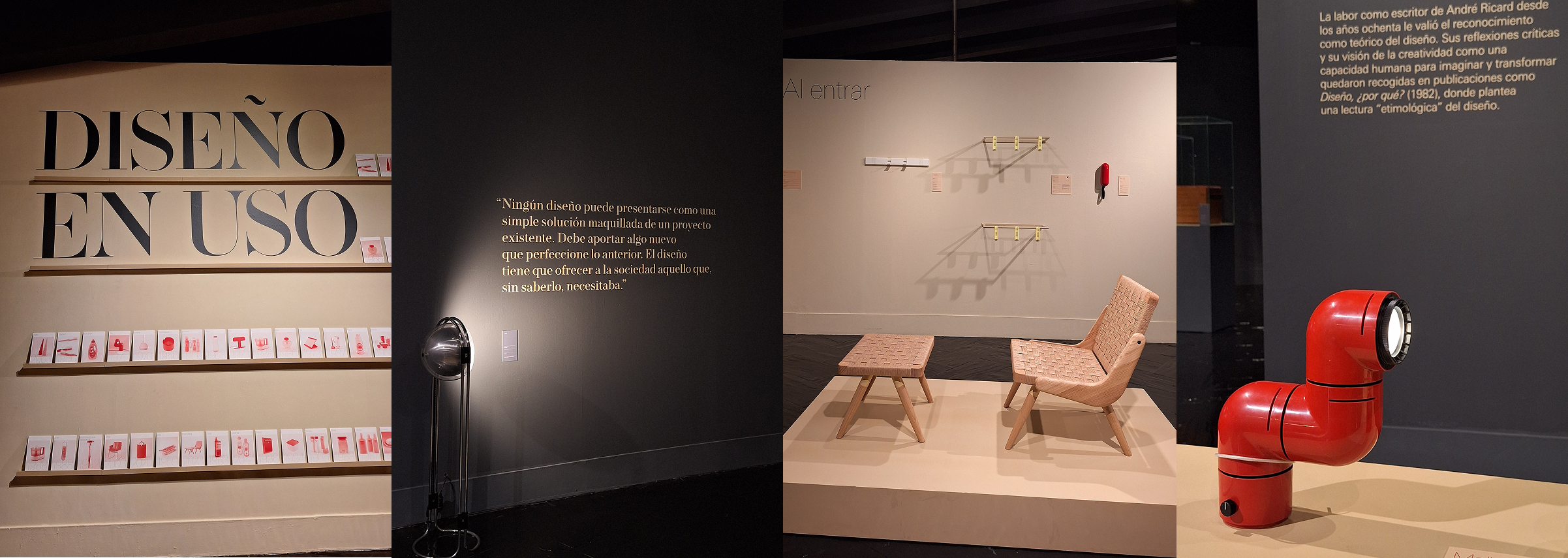
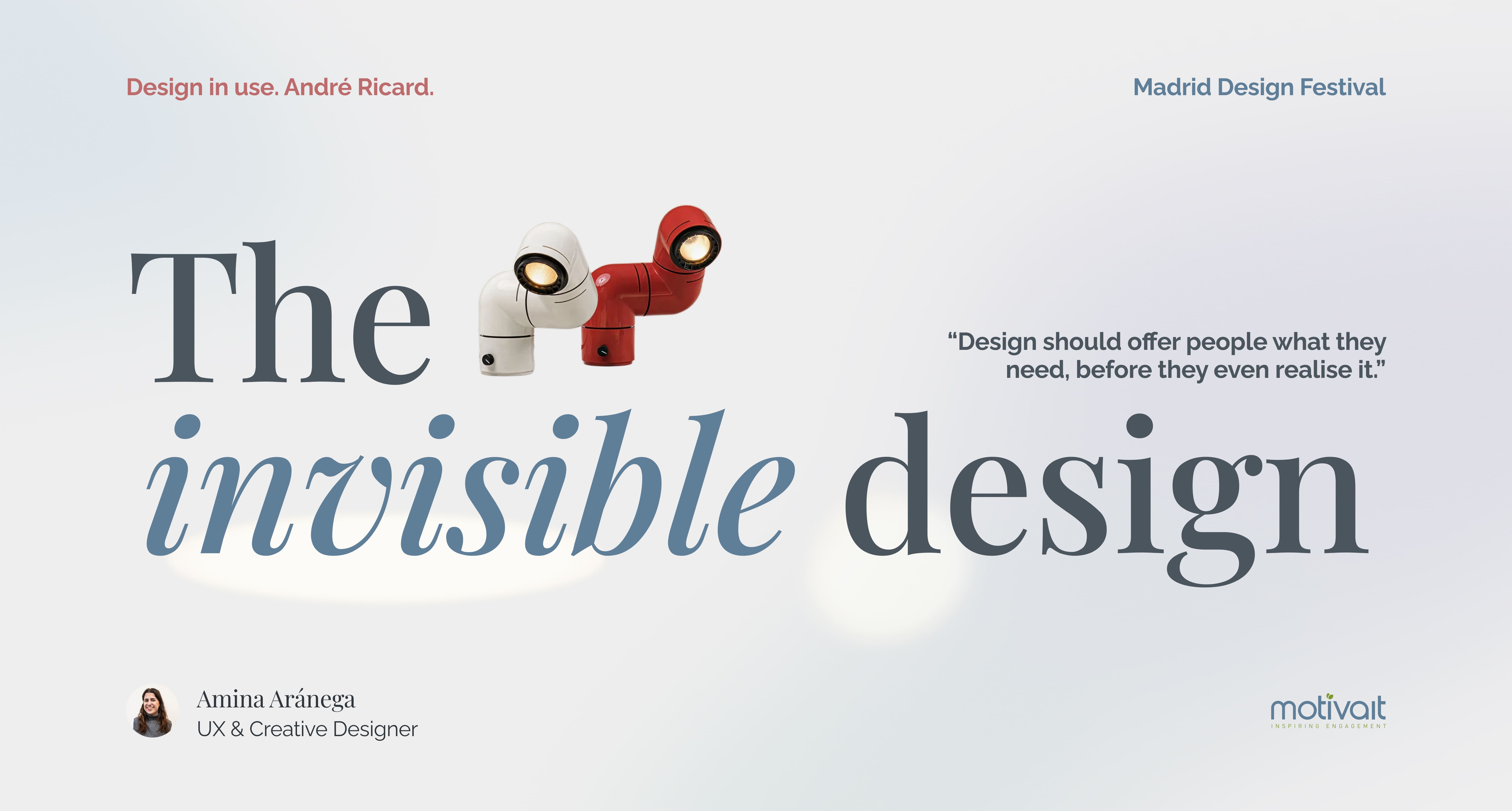
As part of the ninth edition of the Madrid Design Festival, I had the chance to attend “Design in use”, an exhibition created by André Ricard, one of the true pioneers of industrial design in Spain. Ricard has transformed the way products are designed by placing the user’s needs at the heart of the problem, always asking: “How can I make their life a little easier?”
The exhibition itself reflects that philosophy. There are no display stands or museum showcases. Instead, you move through a series of familiar spaces, a dining room, a kitchen, a studio, where each object sits exactly where you’d expect to find it, revealing how every design decision was made with purpose.
Ricard has spent decades designing everyday objects: the Clipper lighter, cleaning products, lamps…Things we all recognise, yet never stop to question. We simply know they work, and that they make life that bit simpler. When something works as it should, we stop noticing the object itself; we focus entirely on what we’re doing. The design fades into the background, and all that remains is the experience, one that, if it feels right, will bring people back.
As a UX designer, I found this deeply fascinating. Ricard was practising user-centred thinking long before anyone coined terms like engagement or user-first. The vocabulary didn’t exist yet, but the understanding did. He already knew what actually mattered.
The same principle plays out in digital products every day. When an employee opens their work platform because they genuinely want to. When a customer returns because a brand adds value to their life. When a student finishes a module without anyone nudging them along. That’s good design, not because it’s clever or visible, but because it adapts quietly into people’s routines and makes them work better. Ricard calls it design in use. We now call it user-centered design. Different words, same truth.
Great design ideas travel across disciplines and across decades. And real loyalty, whether to a physical product or a digital one, is the kind that goes unnoticed. The kind that simply becomes part of people’s lives, making them just a little bit better.